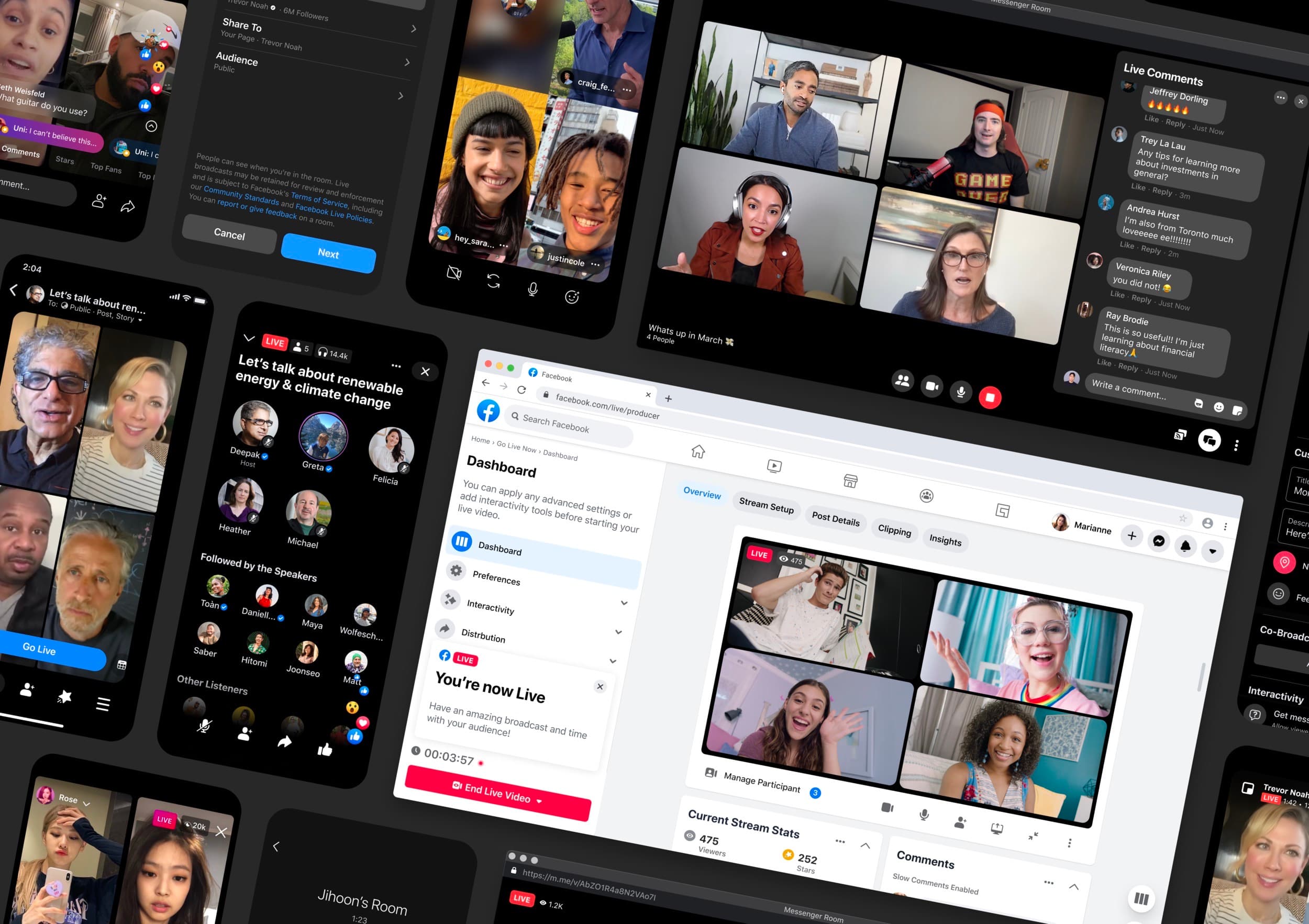
Live Rooms
2020–2021 | Meta
Co-broadcasting across Facebook, Messenger, and Instagram; led design for Live Audio Room and Messenger Live Room.
Overview
Live Rooms enabled co-broadcasting across Facebook, Messenger, and Instagram, allowing 2+ participants to go live together. I served as the design POC (point of contact) for video-calling-related features, working across the Live, Watch, Messenger, Monetization, Public Figures, and Groups teams. My core responsibility was to ensure cohesive broadcaster experiences across all surfaces.
Design Approach
I leveraged my expertise in video calling to support consistent broadcaster experiences, introducing audio/video controls, speaker management, and accessibility features while bridging gaps across platforms. The unified approach meant patterns designed for one surface could be adapted across Facebook, Messenger, and Instagram with minimal rework.
Remote Presence at Scale
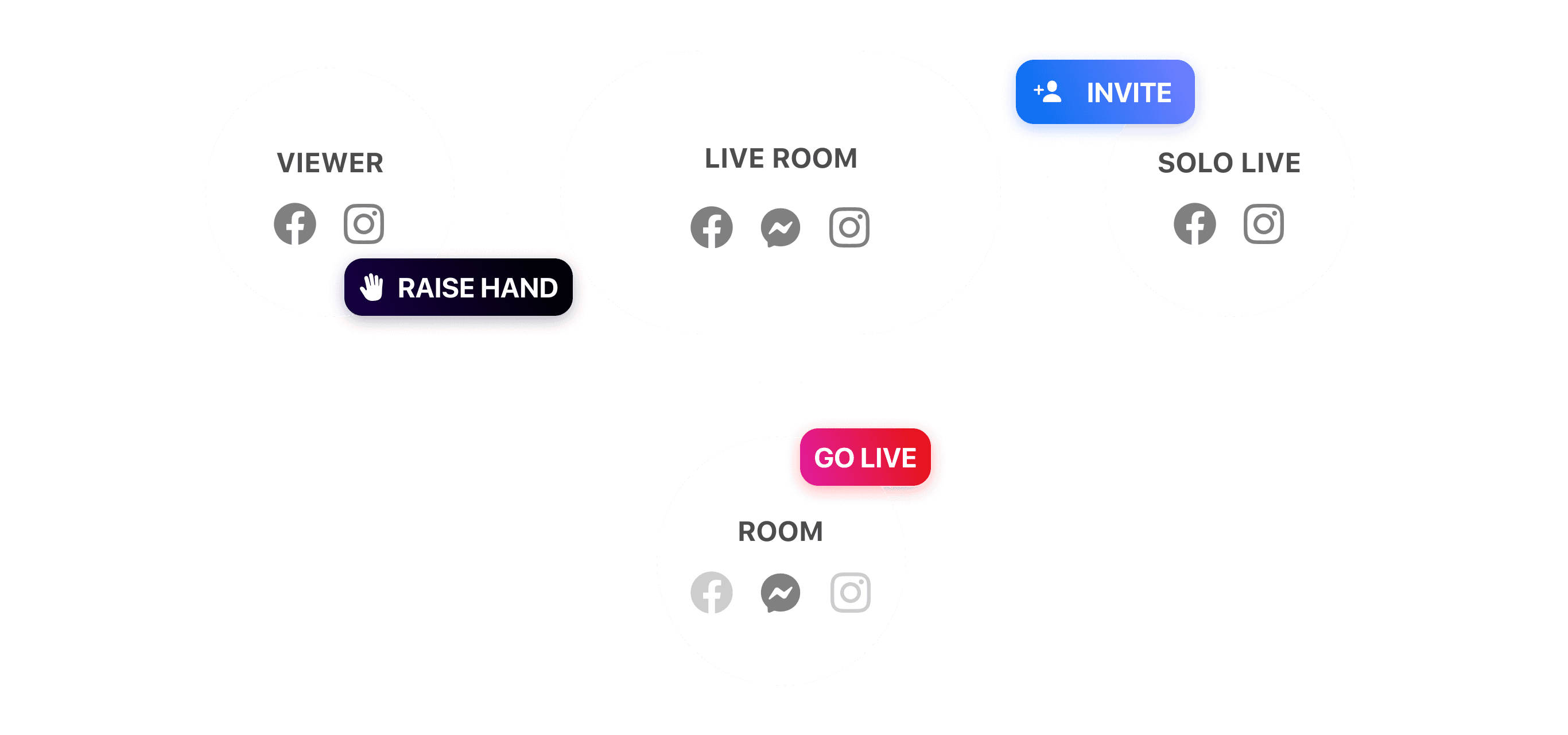
Virtual hangouts span a wide range, from intimate 1:1 video calls to massive live broadcasts with thousands of viewers. Live Rooms sat in the middle of this spectrum, enabling small-group co-broadcasting (2–4 participants) with a live audience. Understanding where each format falls on the scale of remote presence was key to making the right design tradeoffs for controls, permissions, and interaction patterns.
Roles & Co-broadcast Formats
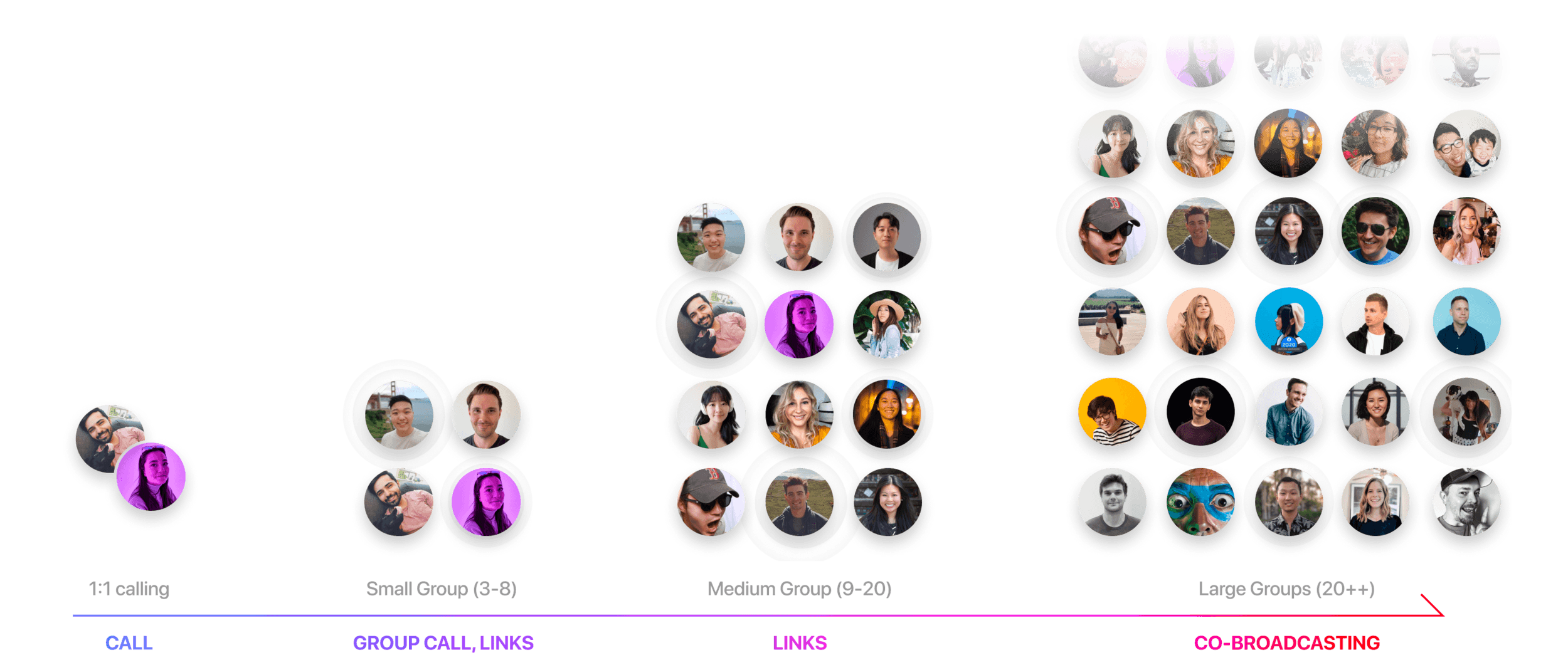
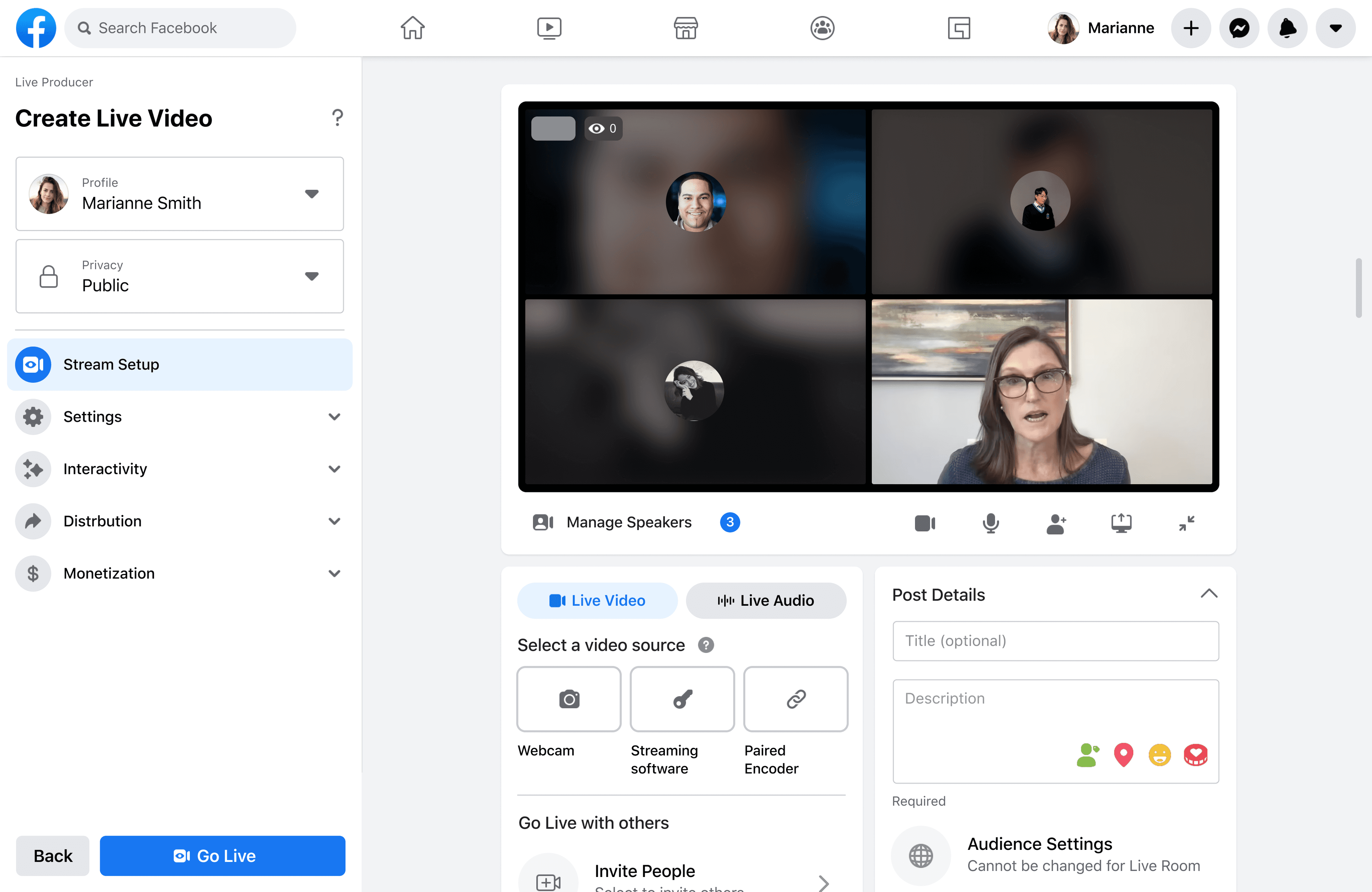
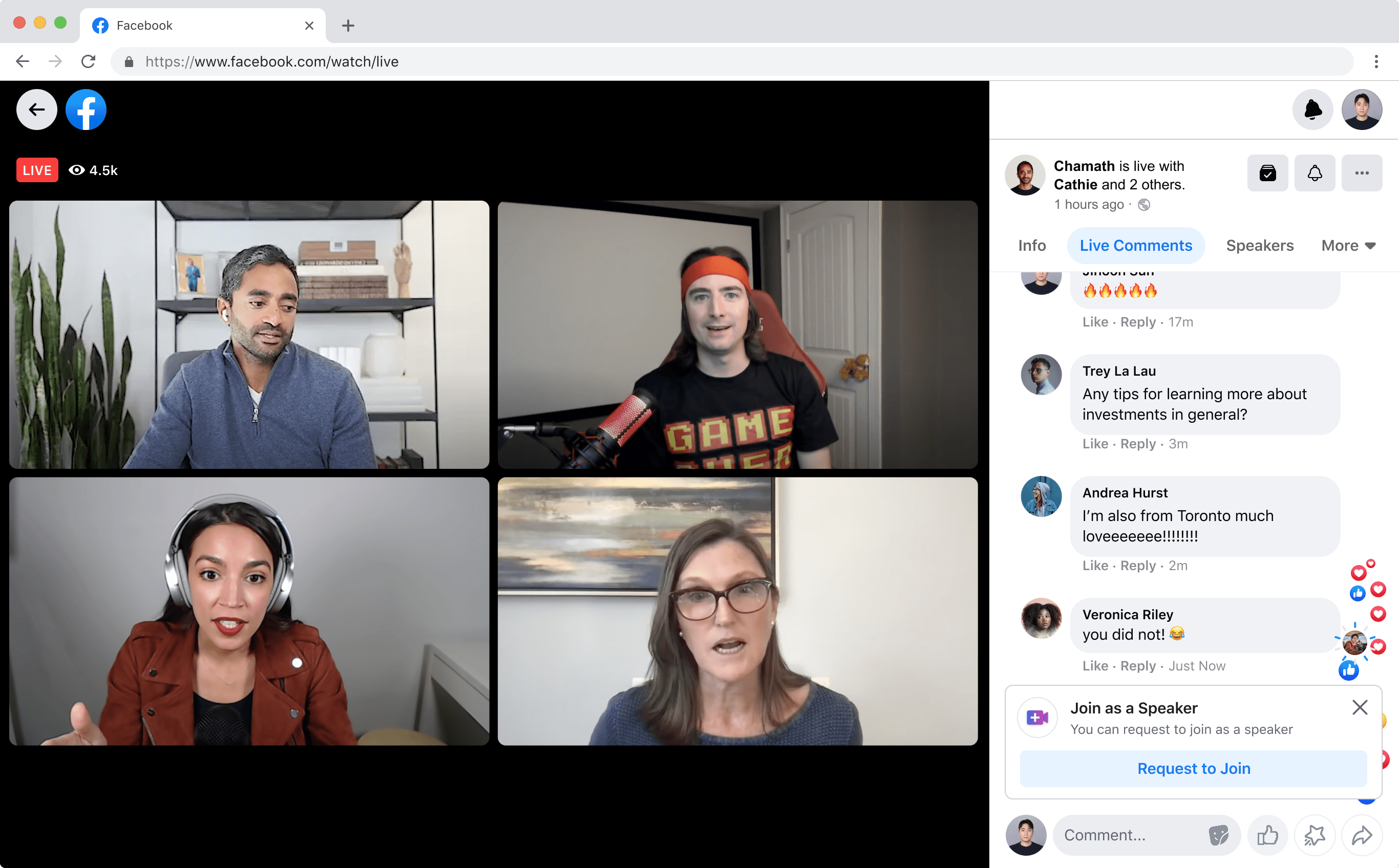
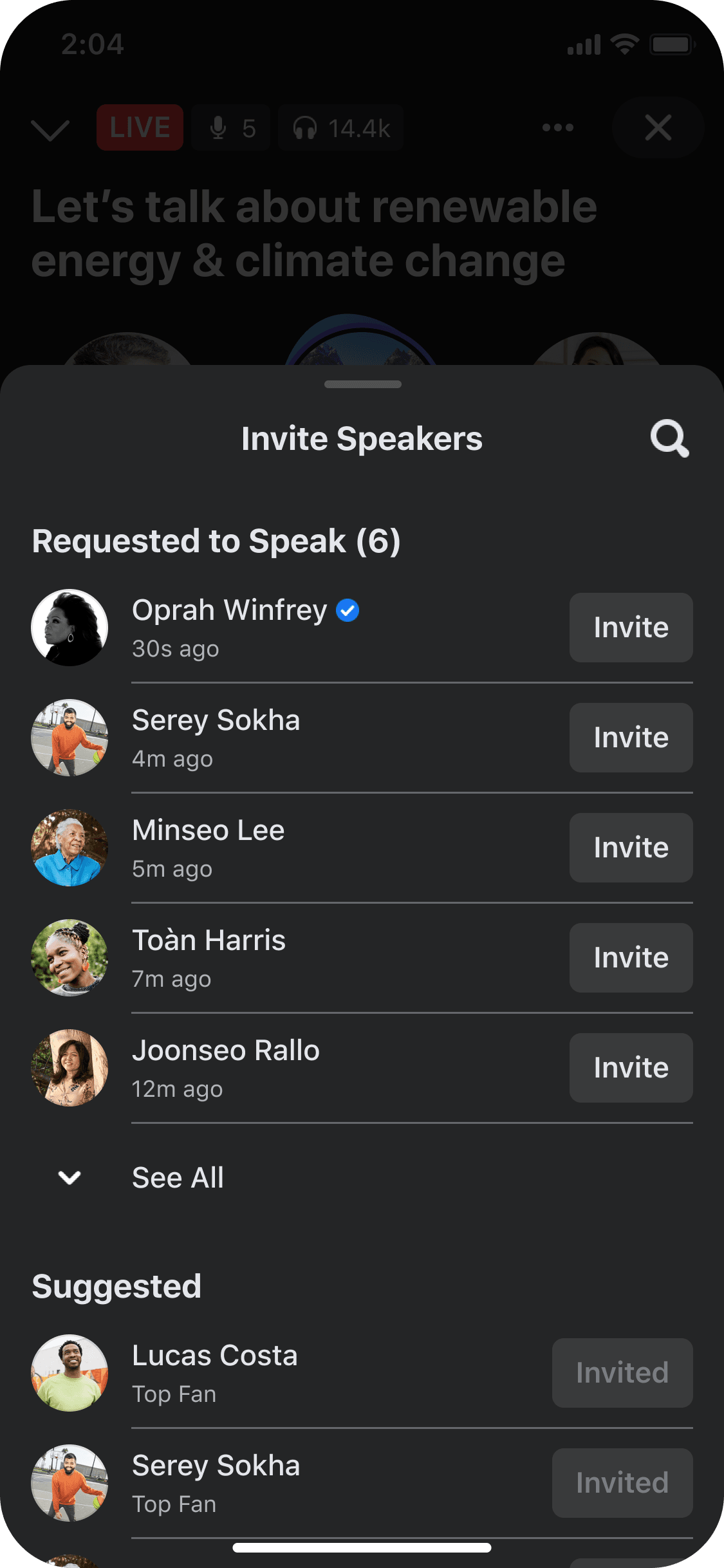
Live Rooms introduced two distinct roles: stage participants (host + speakers) and audience (viewers/listeners). The host controls the room, inviting speakers, removing participants, and managing permissions. Speakers can be invited before or during a broadcast, and the host can revoke speaking rights at any time. This role-based model was consistent across Facebook Live Room, Messenger Live Room, and Instagram Live Room.
States of a Live Room
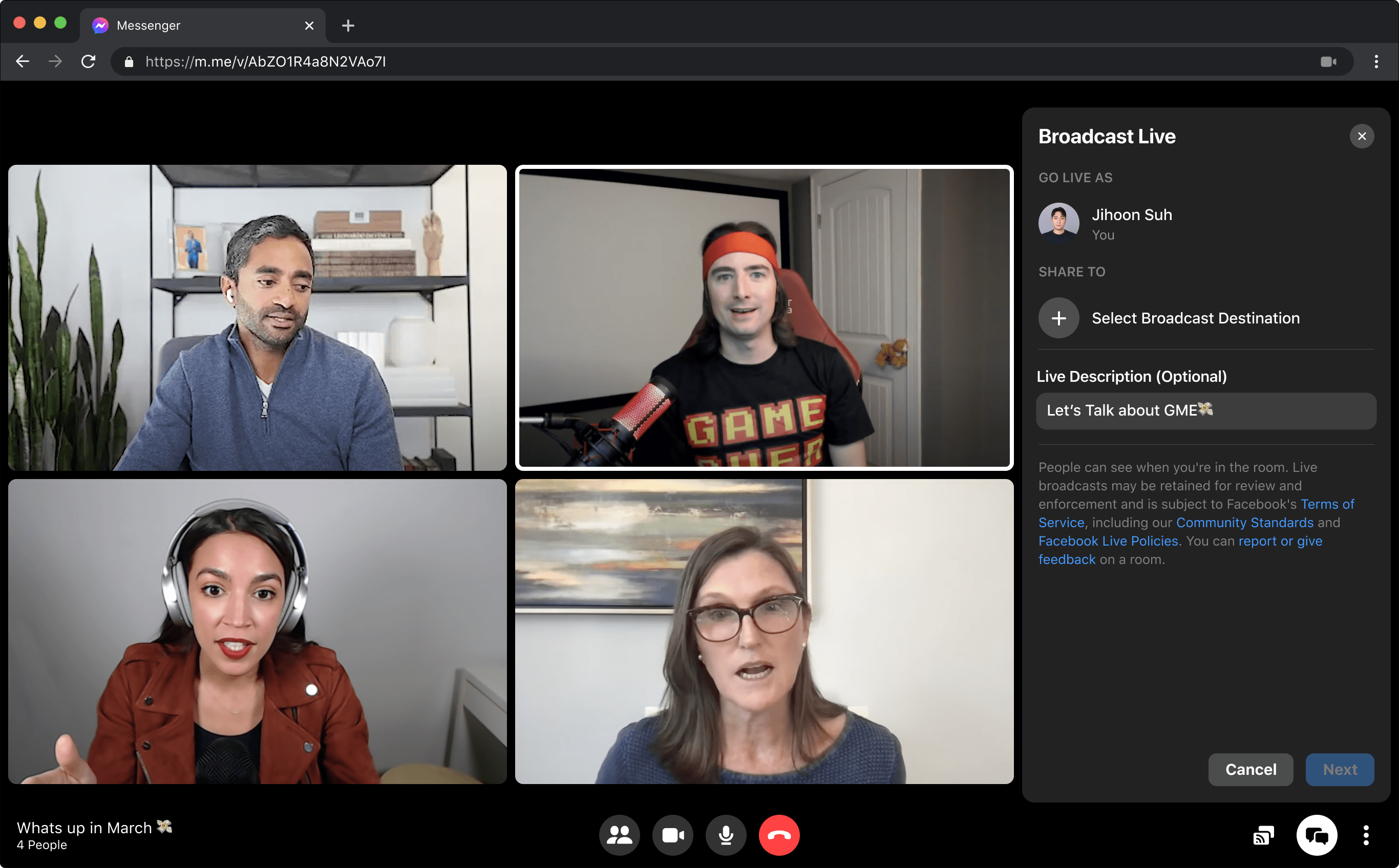
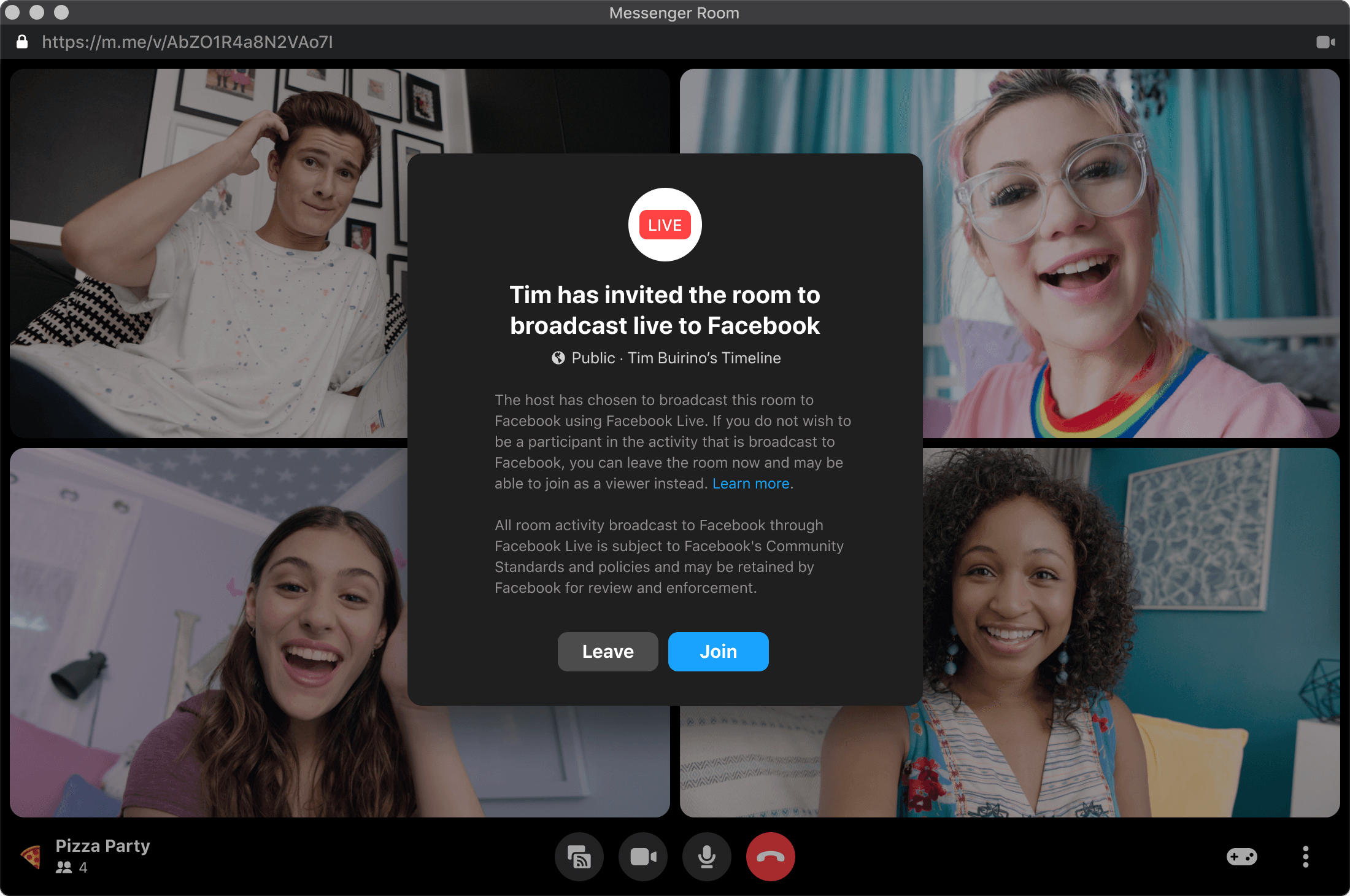
A Live Room could be triggered in three ways: (1) a solo broadcaster invites others to join mid-stream, (2) a listener requests to speak and is promoted by the host, or (3) a closed room (like a Messenger call) goes live to an audience. Each trigger had unique UX considerations: the invitation flow, the transition animation, and the permissions model all differed based on the entry point.
Tech Architecture
A unified tech stack across Facebook, Messenger, and Instagram enabled faster iterations and cross-app communication. The shared infrastructure meant that improvements to audio/video controls, speaker management, or accessibility features could be rolled out across all three platforms simultaneously, reducing duplicated effort and ensuring consistency.
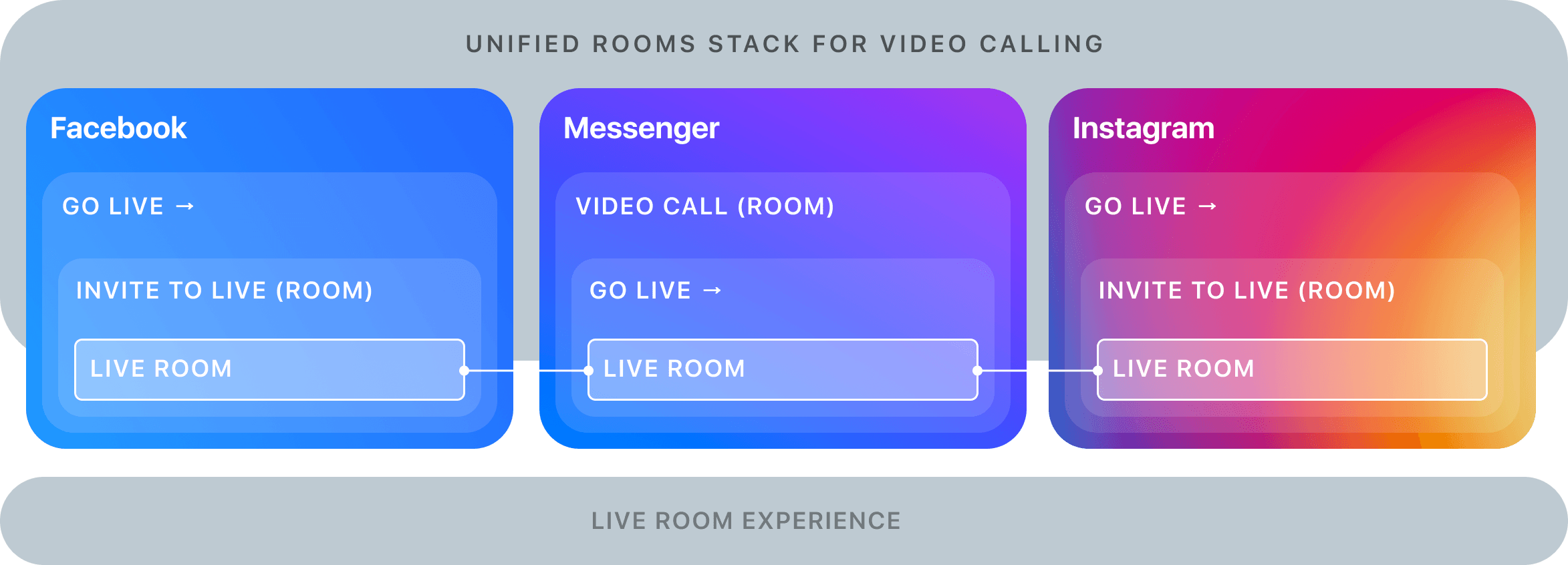
Live Room: Facebook and Messenger
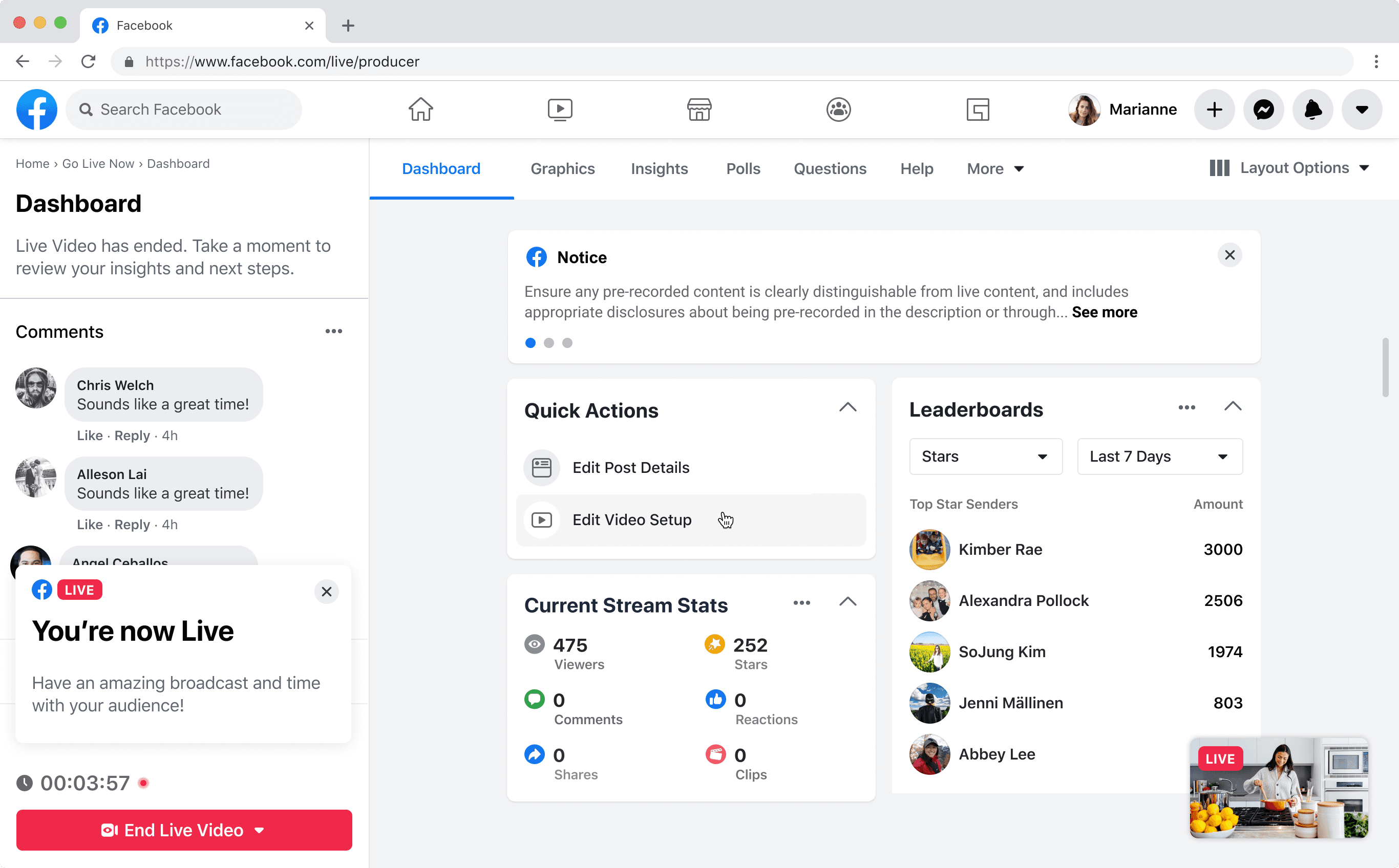
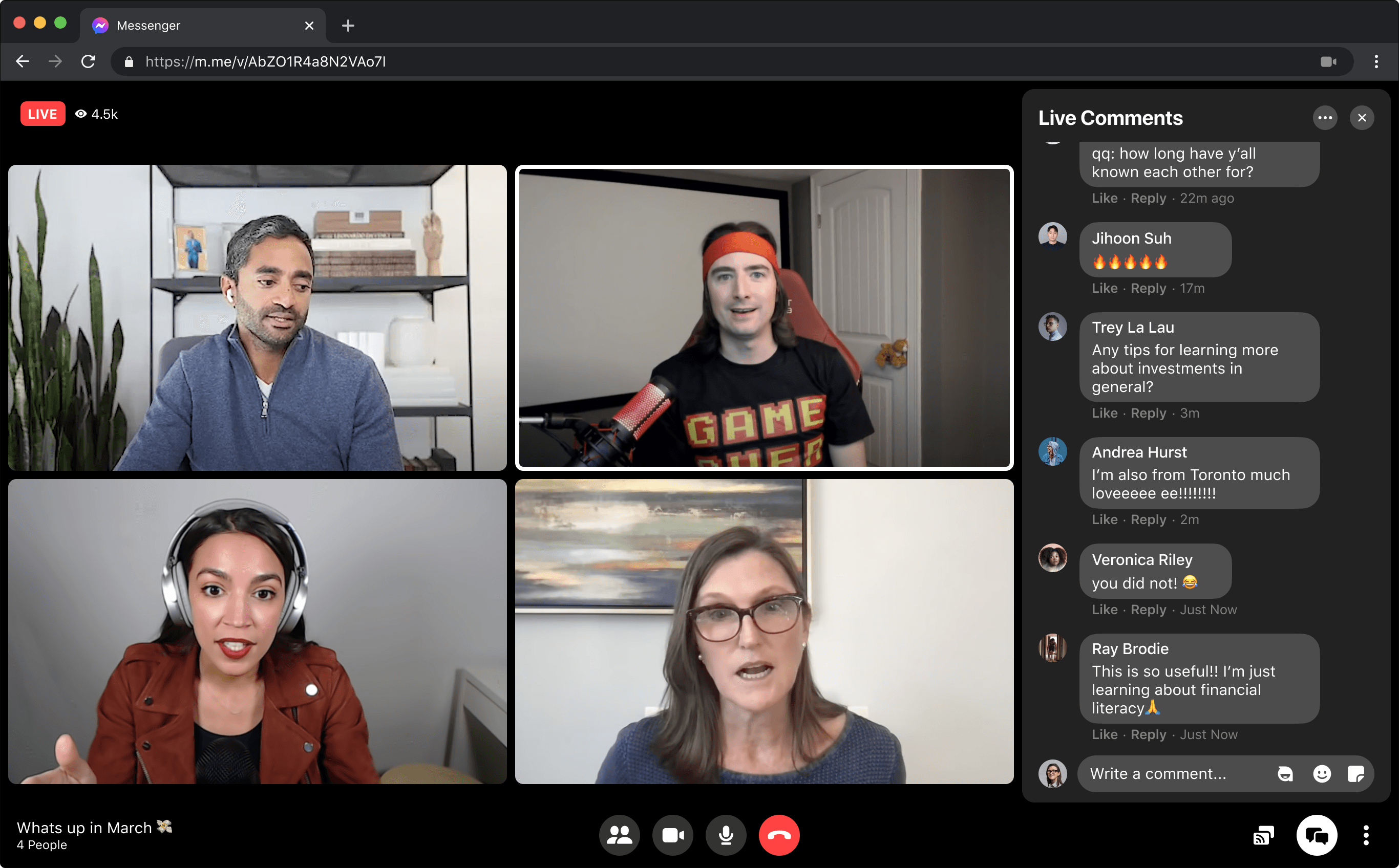
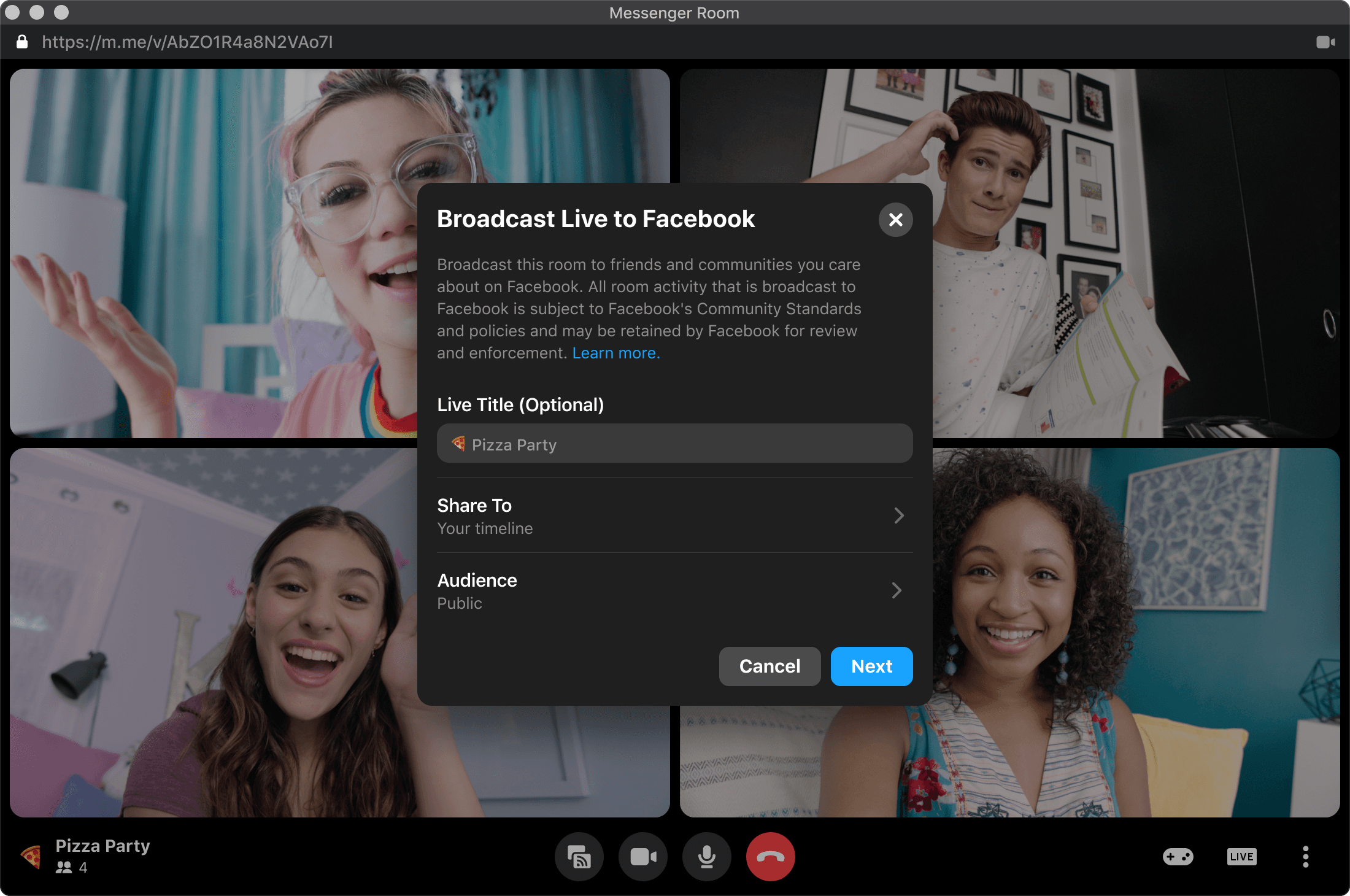
For the Facebook and Messenger surfaces, I redesigned the Live Producer experience to support multi-participant broadcasts. This included speaker invitation and removal flows, audio/video controls for each participant, and a viewer experience that surfaced speaker information and interaction options. The Messenger integration allowed users to start a group call and then "go live" to a broader audience.
Instagram Live Room
I launched the redesigned host and speaker experience for Instagram Live Room, focusing on audio/video controls and call control consistency with the Facebook and Messenger surfaces. The Instagram implementation adapted the shared design patterns to fit Instagram's visual language while maintaining functional parity, ensuring hosts and speakers had the same core capabilities regardless of platform.
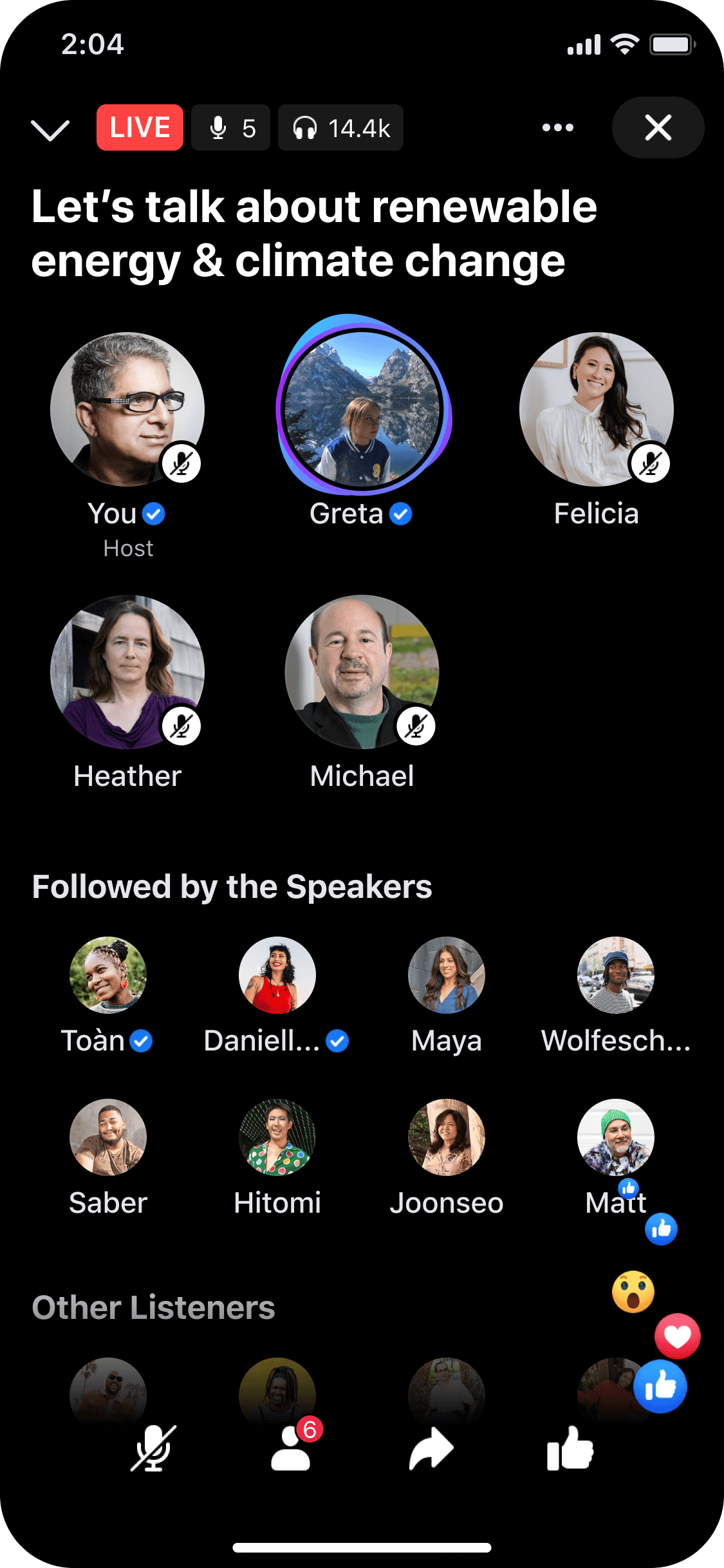
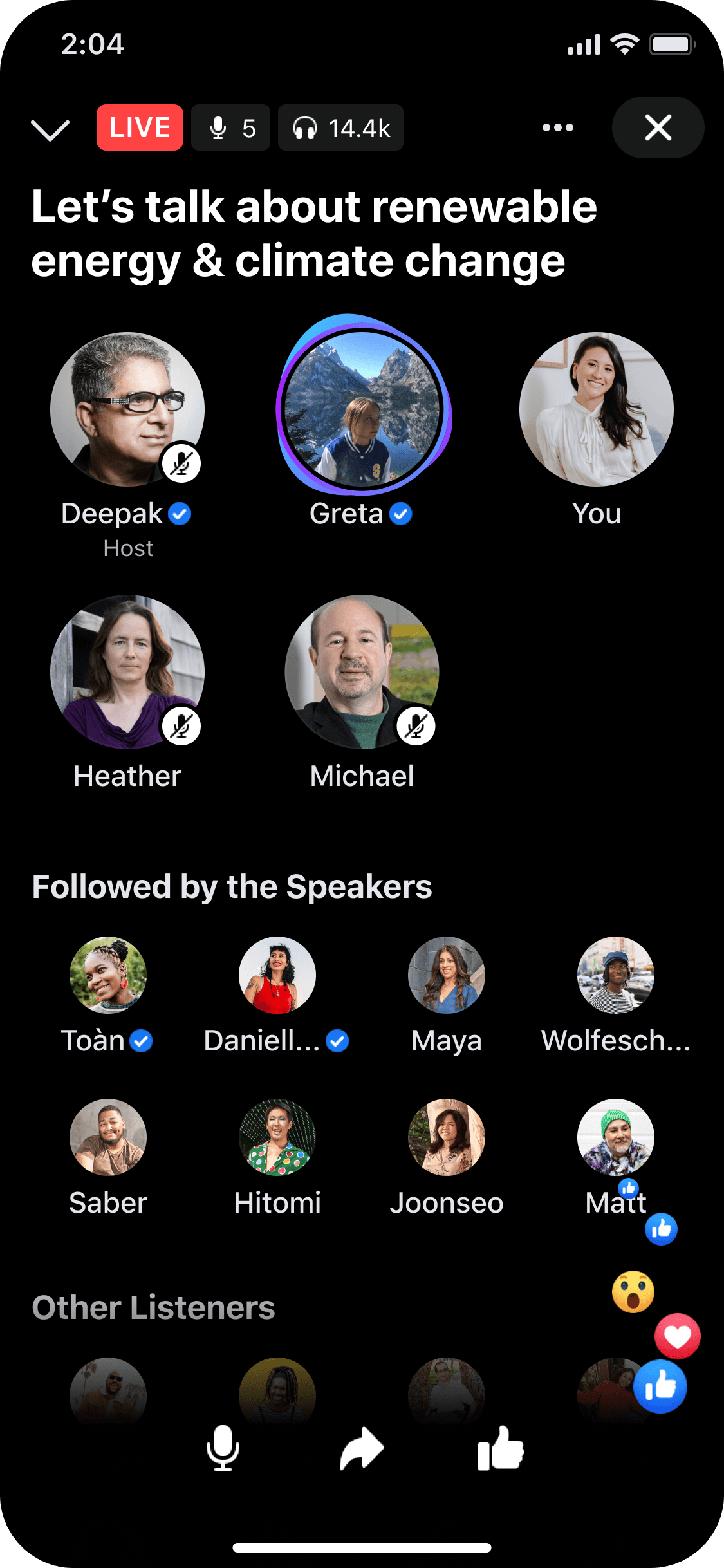
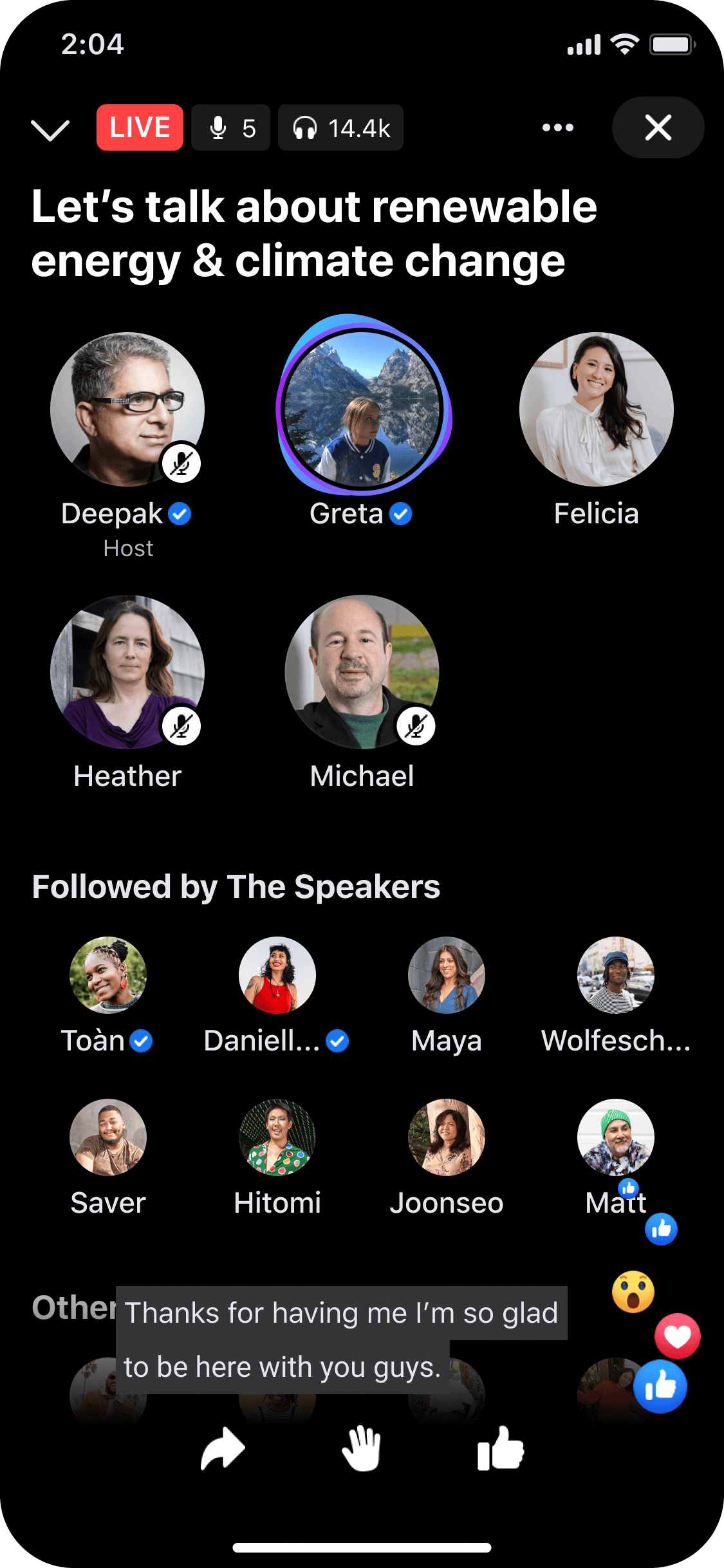
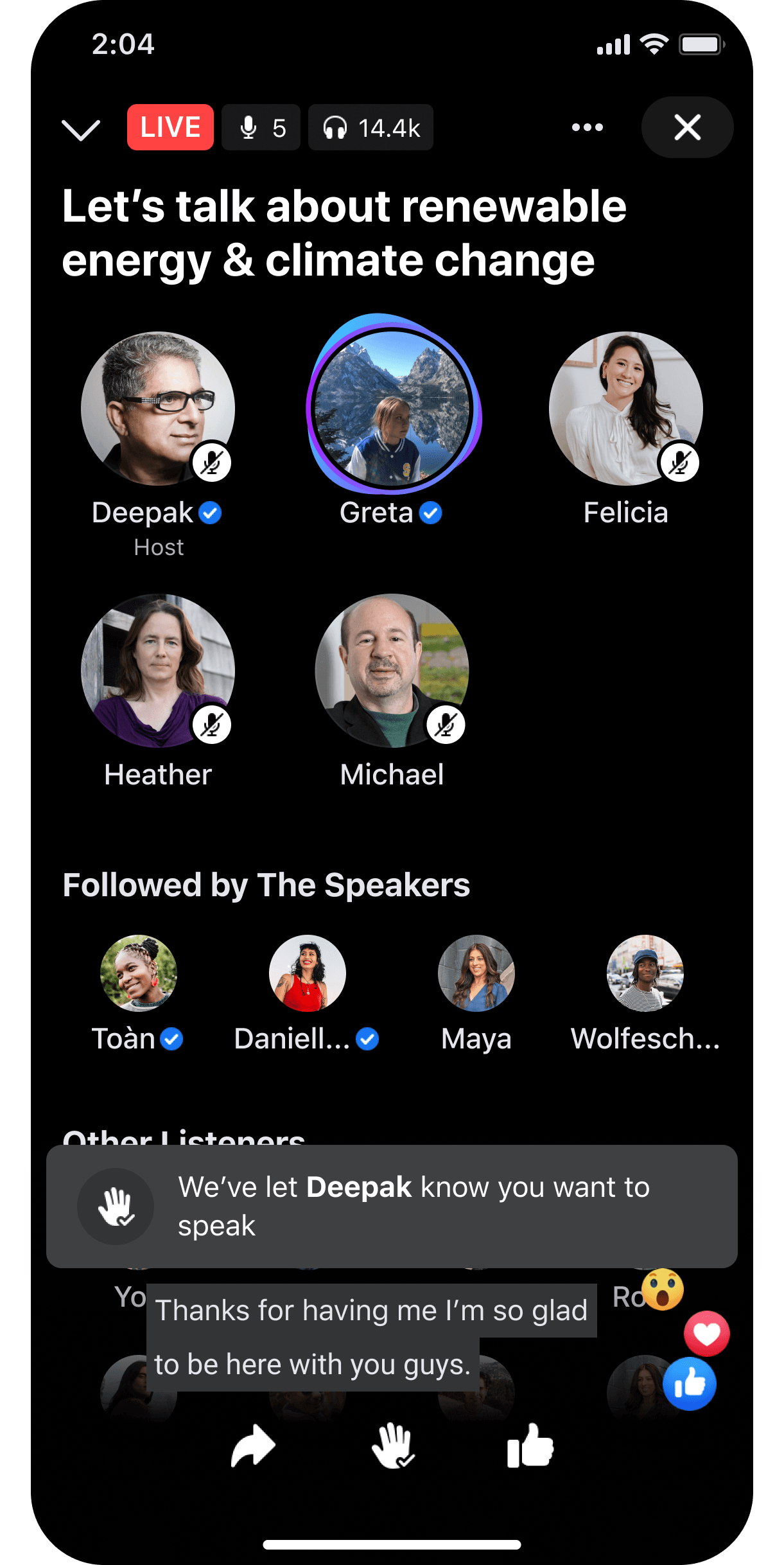
Facebook Live Audio Room
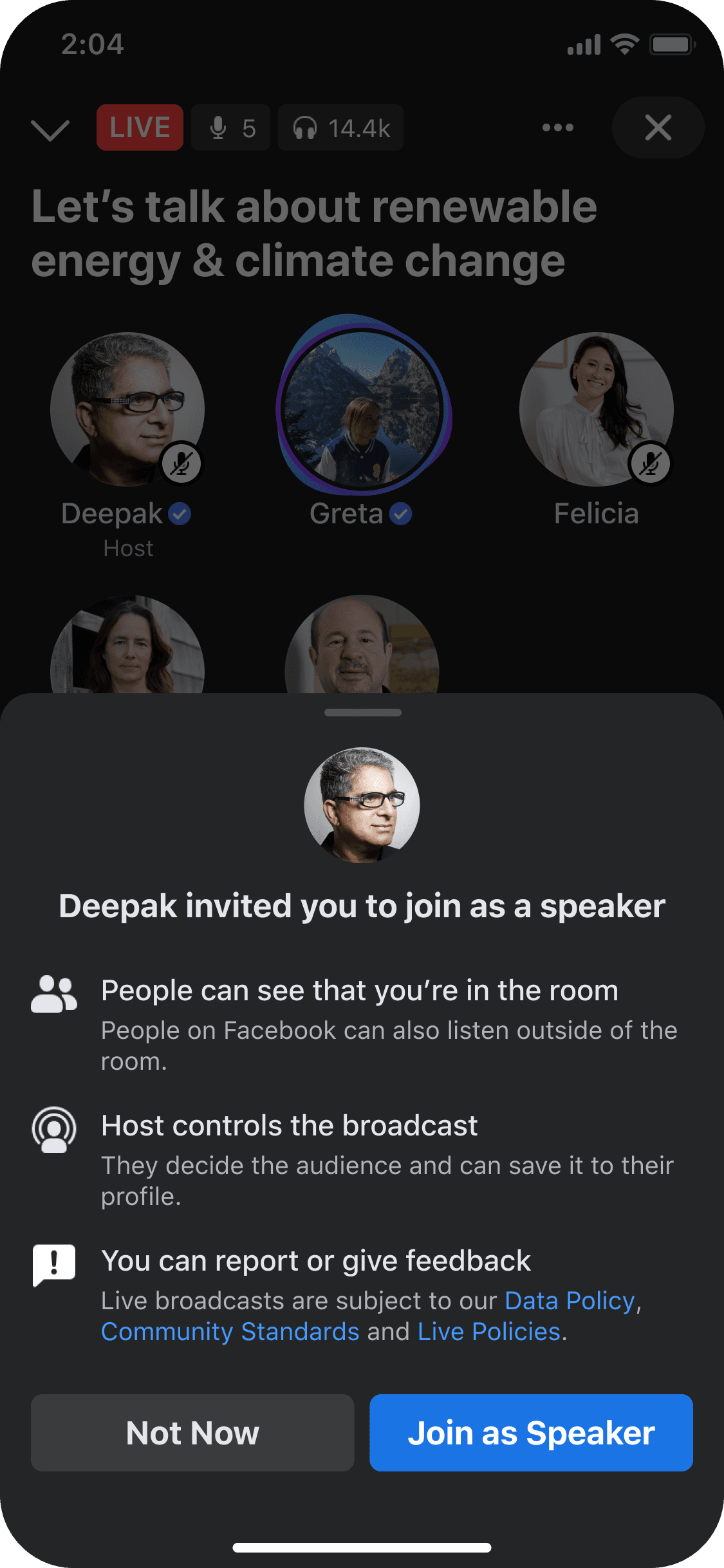
Joined as Lead Designer for the MVP launch of Facebook Live Audio Room. Addressed the holistic experience and edge cases: speaker invitation, rights management, accessibility, and post-live experiences. Collaborated across Live, Watch, Monetization, Public Figures, and Groups teams. Design principles established here influenced subsequent Meta audio features like Soundbites and Podcasts.
Post-Live & Discovery
Designed the post-live experience for recorded Live Audio Rooms, enabling rooms to persist as evergreen content. This included news feed cards for hosts and ended rooms, scheduled event promotion, and a recorded room player that drove 10x listener growth compared to live sessions.
Outcome
Live Audio Room launched in the US with 100% rollout by end of H1. Audio/video controls and speaker management patterns rolled out to Facebook and Instagram. The design principles established for Live Rooms influenced subsequent audio features like Soundbites and Podcasts.
10x
listener growth from recorded rooms
10%
co-broadcast DAU increase